Why should Europe invest in playgrounds?
In the midst of the crises and challenges Europe is facing, it might sound naïve to talk about playgrounds…
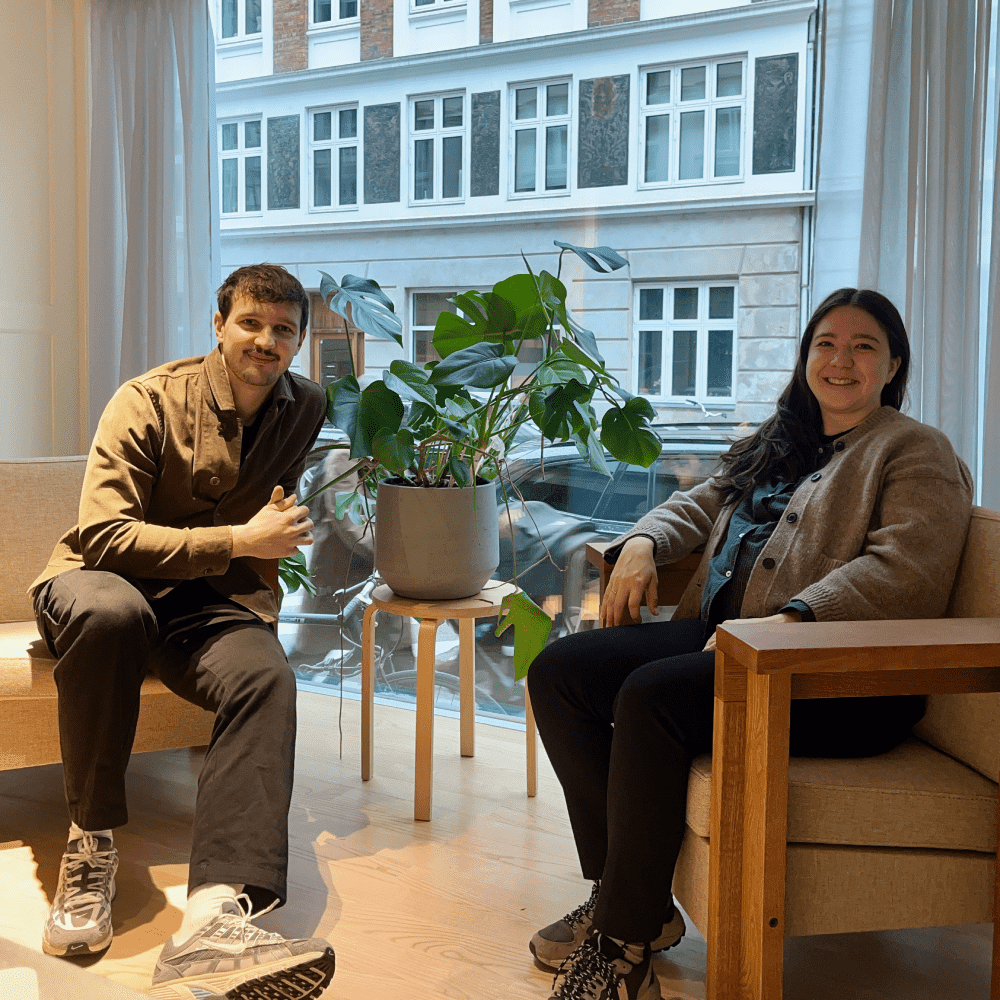
But playgrounds are some of the last true social spaces — places where interaction begins, trust is built, and communities form. This week I spoke to Johanna Stevns Fabrin, Managing Director of 21st Europe and former strategist at IKEA’s innovation lab Space10, to explore why playgrounds may be one of Europe’s most strategic investments for the next 75 years.
Johanna spent years working with strategic design, including at Space10 – the now-closed external innovation lab for IKEA. Space10 explored topics from solar energy and food to urban housing, testing how design could help a global company think and act differently on a 5–10 year horizon.
That experience shaped both the tools and mindset behind 21st Europe. At Space10, Johanna learned how design can be when it makes complex ideas tangible. You visualise a concept early, put it in front of people and treat it as a prototype. That draws in diverse stakeholders, activates honest feedback and, as she says, brings “smarter people to the table than us.”
21st Europe is an attempt to use those same design-driven tools, but in a context that feels more meaningful: the long-term future of Europe itself.
Why playgrounds, and why now
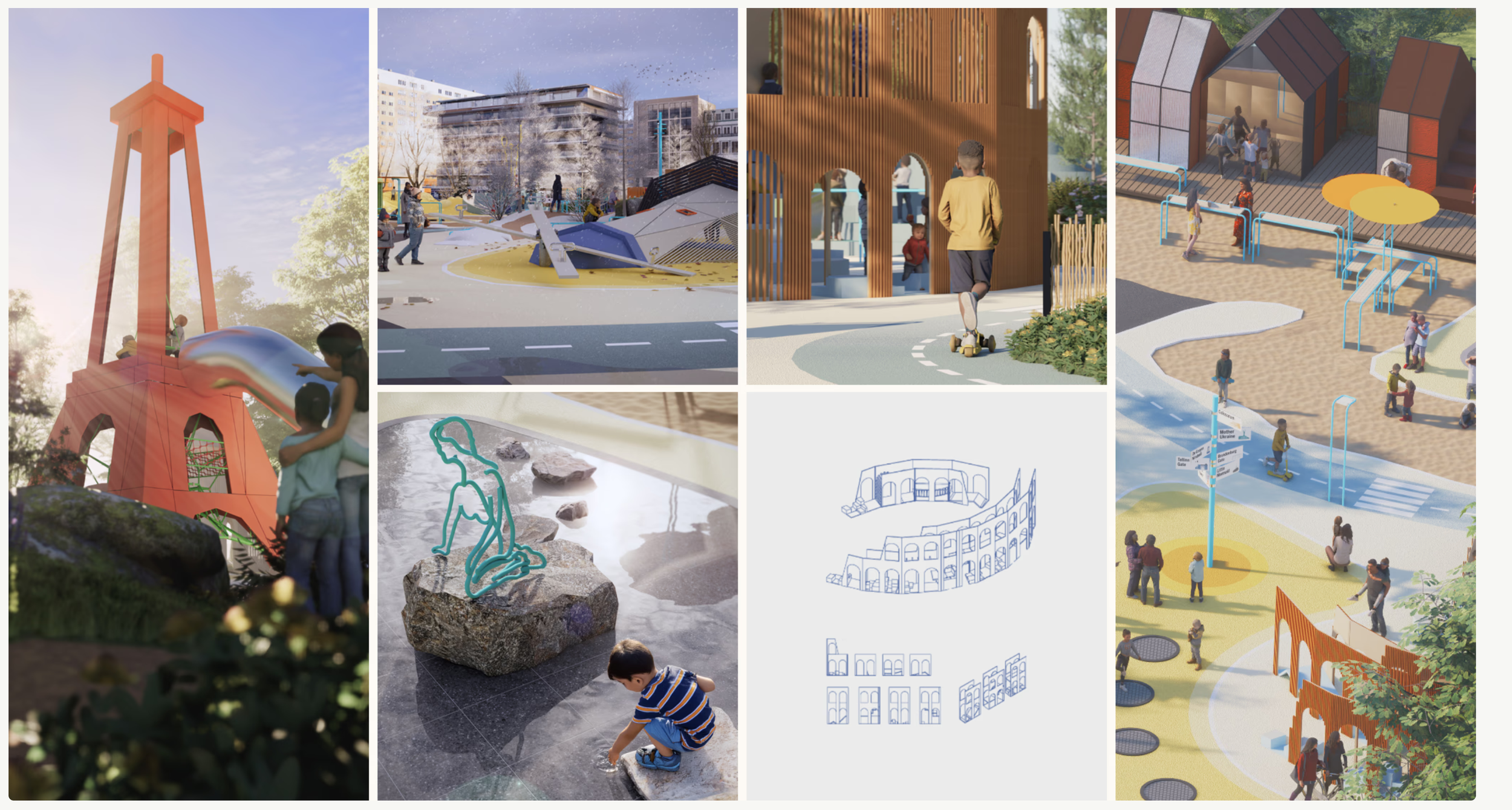
21st Europe’s first major project we discussed is called Continent of Play. On the surface, it is about playgrounds. But the ambition is much bigger: to help Europe imagine itself 75 years into the future and to frame that future around ambition, optimism and inclusion.
Johanna and her co-founder, former Space10 CEO Kaave Pour, both have small children and spend a lot of time around playgrounds. That made playgrounds a natural starting point. But the choice was also political and cultural.
They see a growing European focus on defence and security: more budget for weapons manufacturing, more talk of hard power. Johanna is clear that security matters, especially in a time of war and geopolitical tension. But she worries that this focus risks overshadowing the very things that make Europe worth defending in the first place: public spaces, strong communities and a high quality of everyday life.
Playgrounds become a symbol – and a test – of whether Europe can invest in well-being and social infrastructure while it responds to crises. They are, in her words, “a fantastic symbol, both from a design perspective, but also from a society perspective in terms of investing in our public spaces, investing in our communities, investing in future generations.”
Play as social, climate and economic infrastructure
If you are a mayor or a finance minister, playgrounds can sound like a luxury. Buses, healthcare, housing and basic services typically come first. Johanna argues that is precisely what needs to change.
“We should be thinking about investing in play and playgrounds as part of our critical infrastructure, just like we invest in energy infrastructure, mobility infrastructure,” she says.
She highlights three angles where that becomes very concrete:
1. Social cohesion and non-commercial public space
Across Europe, many public spaces have become commercialized. Playgrounds are one of the last everyday environments where different people can meet without the expectation to buy anything.
“Playgrounds are one of the last public spaces that have not been commercialized”
They are places where neighbours still bump into each other, where it is not socially awkward to talk to strangers, and where, even in a country like Denmark that is not known for small talk, parents will casually chat while their children play.
That makes playgrounds quiet engines of inclusivity, especially in societies grappling with nationalism, exclusion, and fear of immigrants. Children ignore language barriers; adults connect through their kids. Over time, that normalizes difference and builds the everyday familiarity that underpins trust.
2. Climate resilience in everyday form
In cities like Copenhagen, investment in playgrounds is increasingly tied to climate adaptation. Play spaces double as green infrastructure.
During heatwaves, well-designed playgrounds offer shade, trees and cooler microclimates – especially important for children, who are more vulnerable to heat. During heavy rain, many new playgrounds are designed as water reservoirs. Johanna points to a nearby example: a sunken basketball court that can hold excess rainwater when needed.
In this way, money spent on play also delivers climate resilience, making public spaces multifunctional by design.
3. Preparing children for an AI-shaped labour market
The third angle looks further ahead. As AI and automation take over more repetitive and mechanized tasks, Europe’s competitiveness will depend increasingly on human skills that machines struggle to replicate: creativity, social intelligence, negotiation, risk assessment.
Well-designed playgrounds are, in effect, training grounds for those abilities. Children assess risk on climbing structures, negotiate whose turn it is on the slide, and learn to approach unfamiliar peers. Those are the same social and creative skills that will matter in a future labour market – and they are cultivated less in classrooms than in unstructured, shared spaces like playgrounds.
“Playgrounds are not just an investment for families, but… an investment in our future labour market.”
Trust, crisis and Europe’s hidden strengths
Behind the focus on play lies a broader question: what makes Europe competitive and resilient without copying China’s manufacturing model or America’s software dominance?
Johanna believes Europe’s strength lies in how it treats its citizens holistically. High quality of life, strong welfare systems and liveable cities make it possible, in her words, to have four children and a career she loves – something she doubts would be feasible elsewhere.
Trust is central to this. The trust between citizens and government, between public and private sectors and within communities is a form of “societal infrastructure” that is often invisible but economically powerful. High-trust societies need fewer contracts, move faster and take more calculated risks because people broadly believe that others will play by the rules.
That is part of what has made cities like Copenhagen possible: a long, deliberate process of building mutual trust and a shared vision for public space. Play has a therapeutic role for children who sense tension, even if adults never spell it out. It also embodies the ability to look beyond the crisis of the moment.
She recalls a quote she loves: “If we don’t believe that we can make the future better, then we won’t step up and take responsibility for making it so.” Investing in play is one way of insisting that a better future is still possible – and that Europe should design for it, not just defend against threats.
Making Europe tangible, one playground at a time
Continent of Play is not just a conceptual provocation. Johanna and her team have mapped existing EU infrastructure budgets and identified a small sub-budget where even 1% could, in their calculation, finance around 100,000 playgrounds across Europe.
The idea is not a single flagship project in Brussels, but a dense network of play spaces in cities, towns and villages across the continent. They would be visible, touchable and open to everyone – a direct, daily expression of what “Europe” means in practice.
In Copenhagen, 21st Europe has started talking with partners about prototypes: experimenting with more sustainable materials, refining the physical design and iterating on how these playgrounds might look and work in different contexts. The bigger ambition, however, is political. Johanna wants access to high-quality play spaces to become a democratic right tied to European membership, not a luxury that depends on whether a given municipality can afford it in any given year.
That raises uncomfortable design questions, too. Should playgrounds be fenced off for safety, as is still common in places like often happens in countries like Poland? Or should they blend into the surrounding public realm, signalling openness rather than containment, as is more typical in Denmark? The answers will differ, but asking those questions is part of the point.
Beyond GDP: telling a different European story
Towards the end, talking about European strengths, we questioned wheatear GDP should still be seen as the dominant measure of progress. On one hand, it feels objective, easy to compare between two or more numbers. But it might be limiting when trying to capture what makes life in Europe good.
Instead of inventing a new metric, 21st Europe wants to compete on stories. What happens if, rather than comparing GDP curves between Europe, the US, and China, we compare narratives of the future – who we want to be, how we want to live, what our cities should feel like?
For Johanna, the future Europe she wants to describe is one where regulation is not seen as a brake on growth but as a competitive advantage: a guarantee of safe food, transparent digital services and predictable rules that appeal to citizens and international investors alike. It is a Europe that is confident in its own model, rather than “lagging” because it does not match other regions on their chosen metrics.
Continent of Play is one blueprint for that future. Another, already in development, is Made in Europe, which will look at manufacturing and digital services through a similar lens: how Europe’s high standards can become a selling point rather than a handicap.
Both projects share a core aim: to make the value of Europe concrete and emotionally resonant enough that people feel it in their daily lives – and believe that the continent can, and should, remain both competitive and deeply humane.
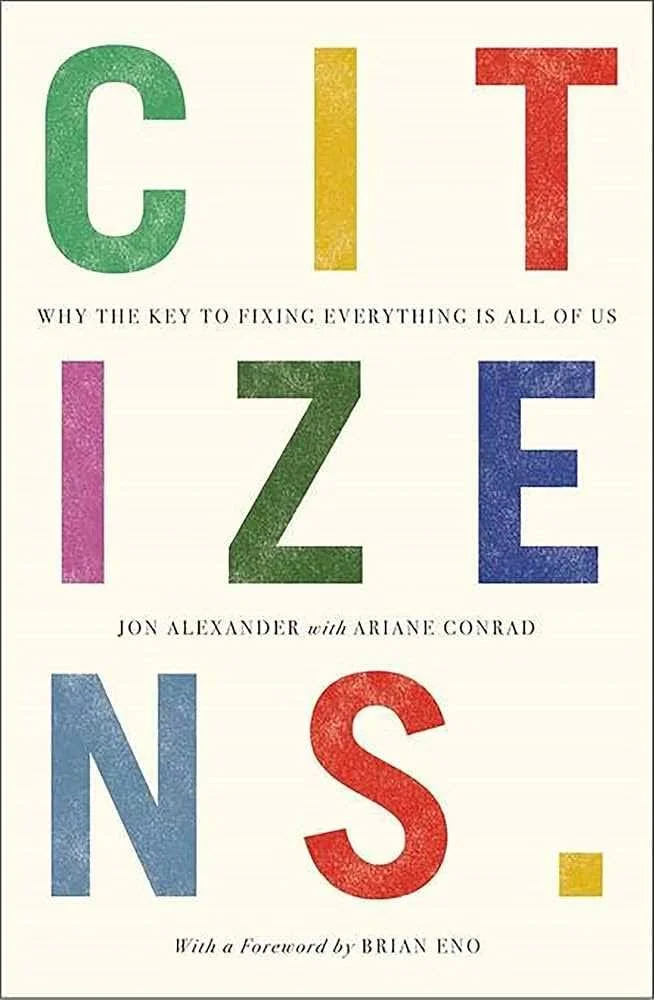
Reading recommendation: