
Can cities save Europe's innovation crisis?
Europe has a strange problem: its cities consistently rank among the most livable in the world, its universities remain globally respected, and its researchers continue to produce cutting-edge knowledge. Yet when the conversation turns to innovation, Europe often finds itself looking across the Atlantic. The world's most influential technology companies emerged in the United States, while the most famous innovation ecosystems are associated with places like Silicon Valley, Boston or Austin.
This raises an important question: how can a continent that excels in education, research and quality of life struggle to transform ideas into globally scalable businesses and solutions? During my recent conversation with Ditte Lysgaard Vind, from BLOXHUB, we explored a perspective that often receives less attention. Perhaps innovation is not only an economic issue but an urban one.
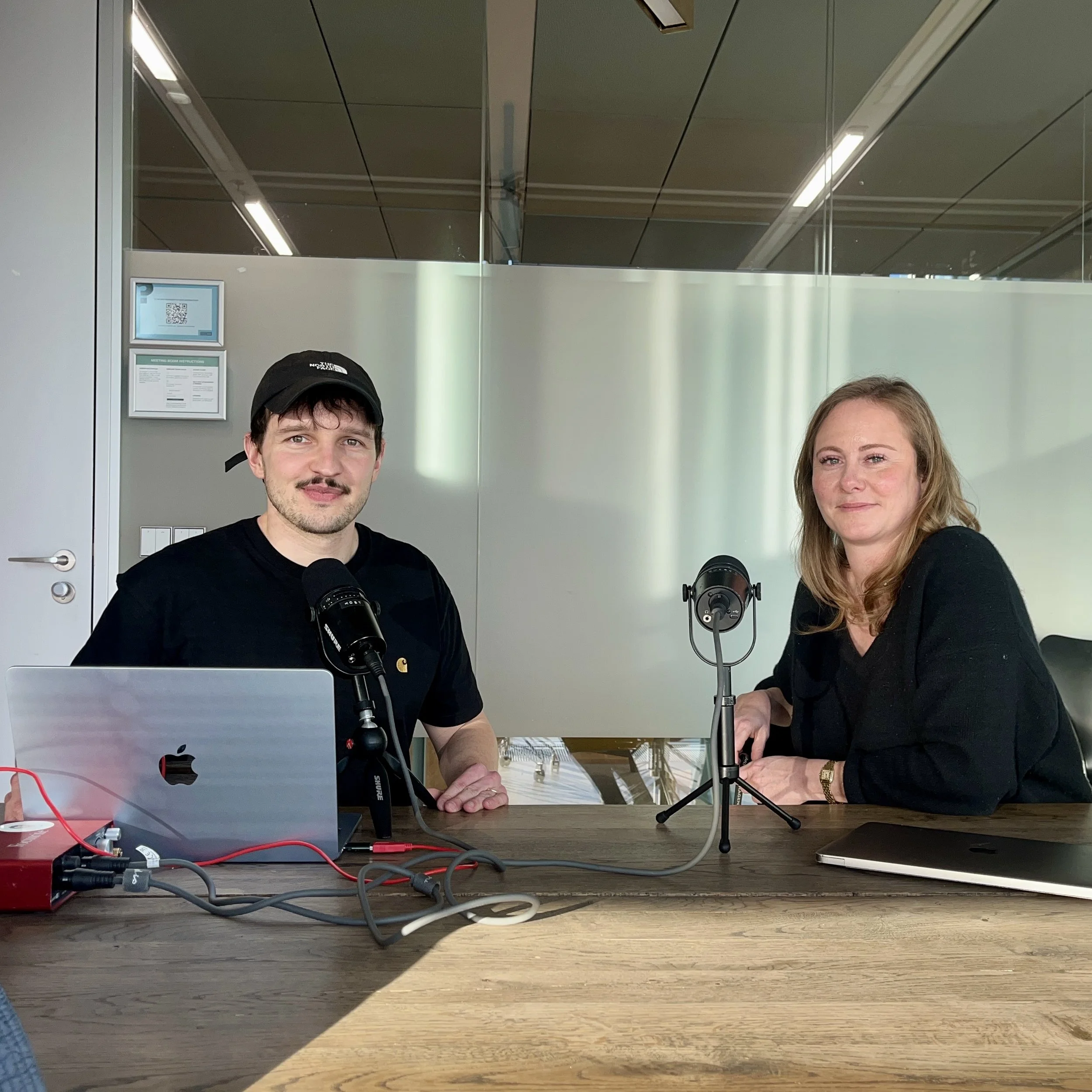
Innovation happens where people meet
When discussions about innovation take place, the focus is often on individual ingredients: research funding, venture capital, universities or talent attraction. These factors are undoubtedly important, but they do not fully explain why some places consistently generate more innovation than others. Many cities possess excellent universities and highly educated populations, yet only a handful become globally recognised innovation hubs.
According to Ditte, the real differentiator is the ability to connect people and institutions. Researchers need entrepreneurs, entrepreneurs need investors, and startups need access to customers, talent and public partners. Innovation emerges when these connections happen frequently and easily. This is where cities play a unique role. As Ditte puts it: “Cities are where innovators meet - and where ideas become real.” Dense urban environments create opportunities for collaboration, knowledge exchange and experimentation that are difficult to replicate elsewhere.
The Kendall Square lesson
Few places demonstrate this dynamic better than Kendall Square in Cambridge, Massachusetts. Located next to MIT, it has become one of the world's most successful innovation districts, attracting startups, researchers, investors and global companies within a remarkably small area. While MIT provides a powerful foundation, the district's success cannot be explained by the university alone.
What makes Kendall Square exceptional is the ecosystem built around knowledge. Organisations actively connect academia with industry, support entrepreneurs, facilitate investment and create opportunities for collaboration. Research does not remain inside university laboratories but moves quickly into the market. For European cities, this is an important lesson. Great universities generate ideas, but innovation ecosystems determine whether those ideas become products, companies and solutions capable of creating real impact.
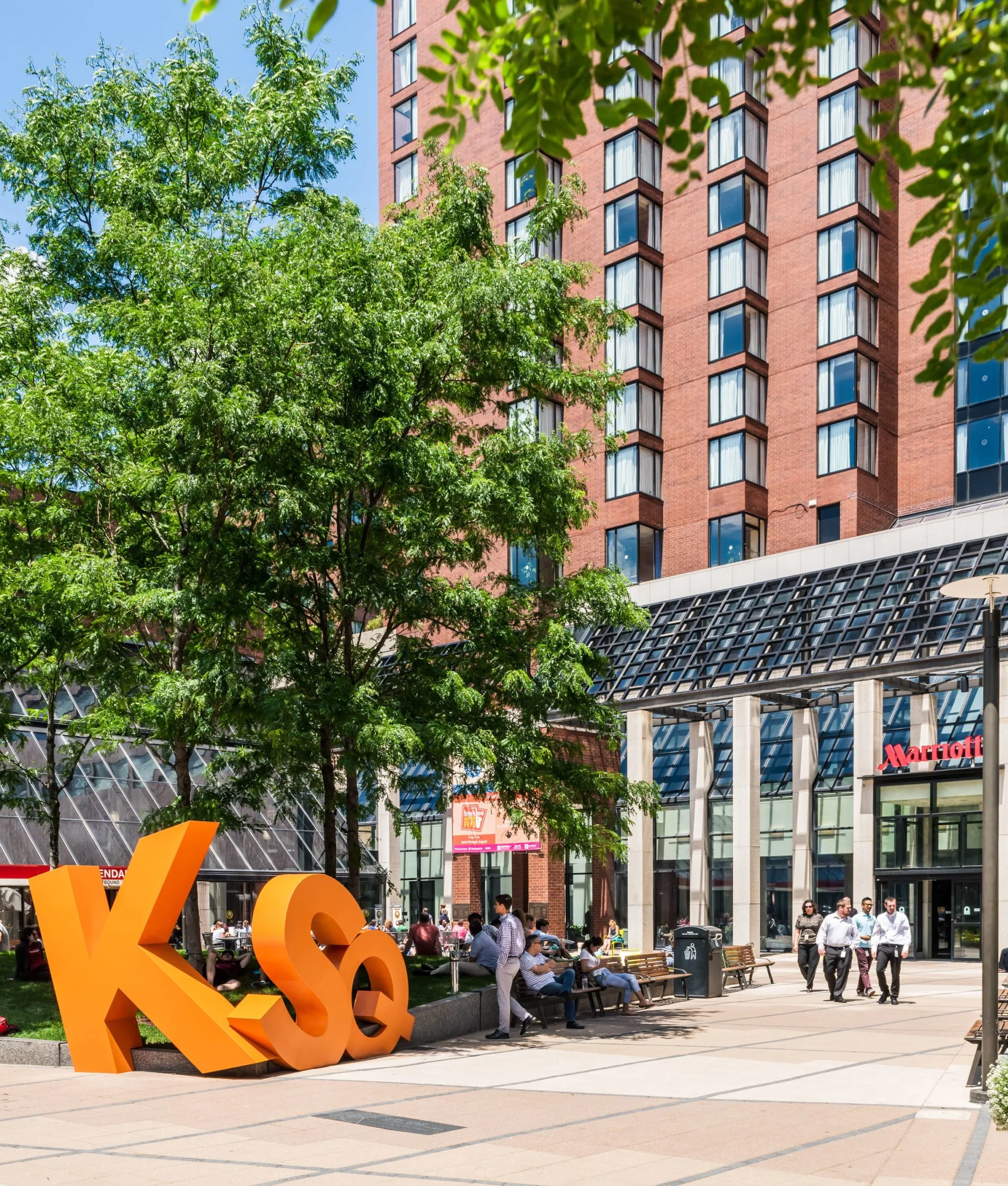
Kendall Square
Europe's scaling problem
One of the strongest themes in my conversation with Ditte was that Europe does not suffer from a shortage of innovation. Across the continent, researchers, startups and cities generate promising ideas in fields ranging from climate technology to advanced manufacturing. The challenge comes later in the process.
As Ditte argues, “Europe does not lack innovation. It lacks the ability to scale it.” Too many promising projects remain pilots, local experiments or niche solutions. By contrast, the United States has built stronger mechanisms for turning ideas into large-scale businesses and industries. This is partly a question of capital, but it is also a question of coordination. Scaling requires alignment between research, markets, public institutions and investors. Without these connections, even the best ideas struggle to move beyond the prototype stage.
Why urban innovation matters more than ever
Urban innovation is often associated with technology, but the challenges facing cities today require a much broader understanding of innovation. Housing affordability, ageing infrastructure, climate adaptation and demographic change all demand new approaches. Cities have become the places where these challenges are most visible and where solutions are most urgently needed.
For Ditte, innovation should never be seen as an end in itself. “Innovation is not a goal in itself - it is a tool to deliver European resilience and competitiveness.” This perspective becomes particularly relevant in the context of climate adaptation. European cities face increasing risks from flooding, heatwaves and resource constraints. The cities that successfully develop and implement solutions to these challenges will not only become more resilient themselves but may also create expertise and technologies that can be shared globally.
Innovation needs a purpose
One of the most compelling ideas from our discussion was that innovation should always be connected to a meaningful societal challenge. In recent years, cities have enthusiastically embraced innovation agendas, smart city strategies and innovation districts. Yet the pursuit of innovation can sometimes become detached from the problems it is supposed to solve.
Ditte warns against this tendency: “There is no value in innovation for the sake of novelty. It just becomes noise and friction.” Housing shortages, climate resilience, energy transitions and public health challenges are already well known. The question is not whether cities can create new ideas, but whether they can direct innovation towards solving the issues that matter most for citizens and communities.
What European cities can learn
European cities already have many of the ingredients needed for successful innovation ecosystems. Copenhagen, Stockholm, Munich, Oxford, Cambridge and Saclay all combine strong universities, skilled workforces and attractive urban environments. The challenge is not the absence of assets but the ability to connect them more effectively.
This is where collaboration becomes critical. Universities, businesses, investors and public authorities often operate in parallel rather than as part of a shared ecosystem. The most successful innovation districts demonstrate that long-term cooperation matters just as much as talent or funding. Cities that intentionally build these connections will be far better positioned to generate innovation and, more importantly, scale it.
Why is the future urban?
The debate about Europe's future competitiveness often focuses on national governments, industrial policy and global markets. While these discussions are important, they sometimes overlook the places where innovation actually happens. Cities are increasingly becoming the arenas where new solutions are developed, tested and implemented.
What emerged most clearly from my conversation with Ditte is that Europe's innovation challenge is not primarily about generating more ideas. It is about creating urban ecosystems capable of turning ideas into meaningful outcomes. The cities that succeed will not necessarily be those with the largest budgets or the most prestigious institutions, but those that connect people, knowledge and capital most effectively. In an increasingly competitive world, that may become Europe's greatest advantage.
Reading recommendation:
📘 Loonshots — Safi Bahcall
📘 Scale — Geoffrey West
