
Can we defeat housing crisis by sharing homes?
Europe has a housing crisis. But the most provocative question today is not only how many new homes we need to build. It is whether building more, in the way we currently build, can still be treated as the default answer.
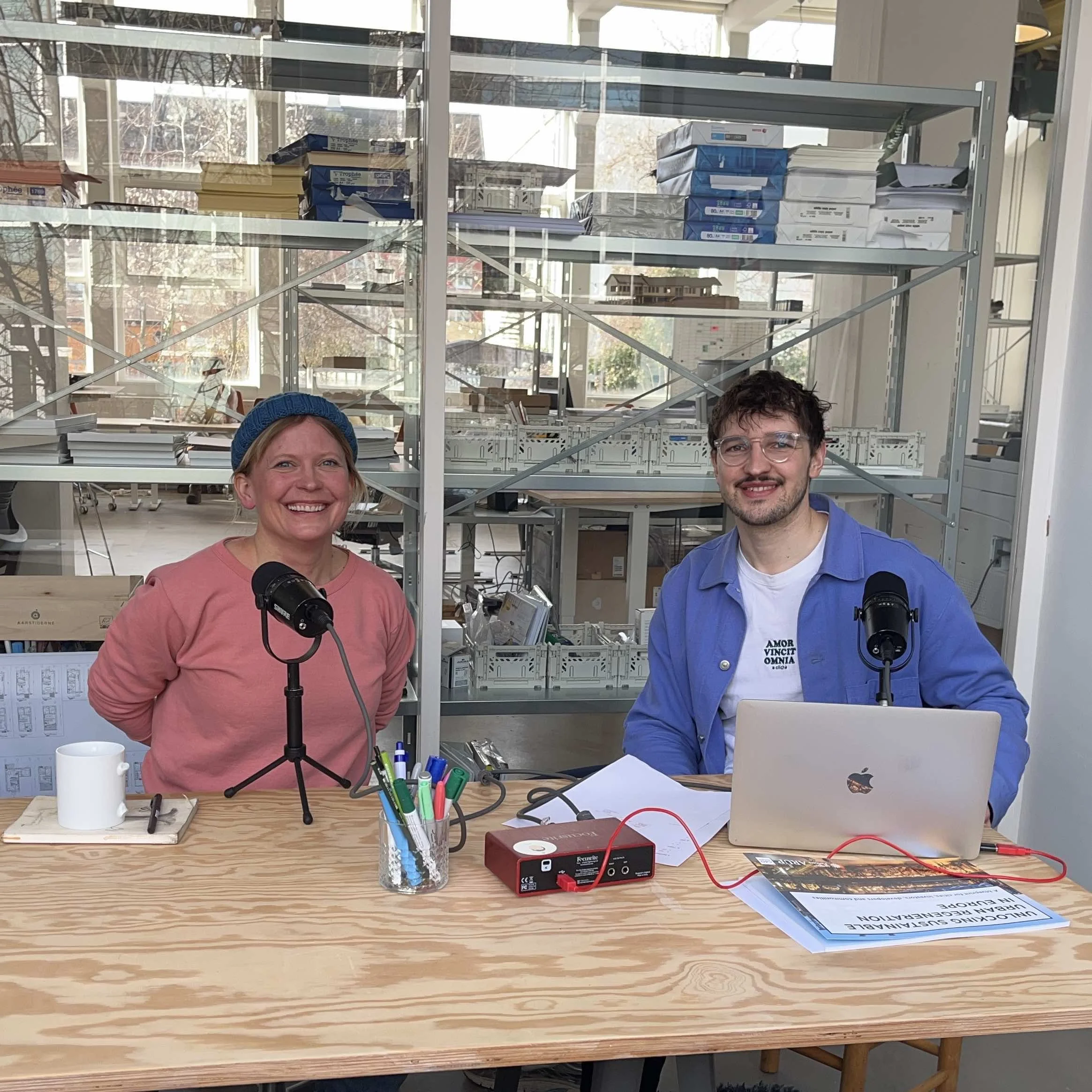
In this episode of Urbcast, I speak with Louise Heebøll, founder of DelHus — architect, strategic urban planner and voice working with housing, cities and societal development within planetary boundaries. Her argument is both practical and deeply political: if the building sector has to reduce emissions, if land is limited, if materials are finite, and if many existing buildings are underused, then the future of housing cannot be based only on new construction.
What if the housing crisis is not just a shortage of homes, but a failure to use the homes and buildings we already have?
Housing is not a silo
One of the strongest threads in the conversation is Louise’s insistence that housing cannot be treated as a separate technical problem. It is not simply a matter of supply. It connects to climate, household structures, ageing, divorce, social inequality, personal economy, planning law, finance, insurance and municipal competition.
As she says in the episode:
“If we just build more stuff, we don’t have a budget for that.”
This is not only a financial, but a climate statement. Louise refers to the Reduction Roadmap perspective: if the carbon budget for construction is radically limited, then the sector cannot continue as if every problem can be solved by adding more square meters.
The building industry is one of the most material-intensive sectors in Europe. New buildings require extraction, transport, production, land, energy and future heating. Even when new buildings are relatively efficient, they still carry an enormous upfront carbon cost.
This does not mean that nothing should ever be built. But it does mean that building new must become a more carefully prioritised decision. What functions truly require new space? What can be adapted? What can be shared? What can be split? What can be transformed?
This conversation connects strongly with previous Urbcast topics, including the episode and article “Should we stop building new buildings?”, where we discussed paradox of vacant and underused space was discussed in relation to housing affordability and transformation.
The city built for a household that no longer dominates
A crucial point in Louise’s argument is that the housing system is still largely designed around the nuclear family: two parents, children, one household, one home - but society has changed.
More people live alone, divorce, age in homes that become too large or too difficult to maintain. More people need smaller, flexible and affordable places to live. Yet many regulations, financial products, insurance models and zoning assumptions still treat the single-family house as the normal and stable unit of urban life.
This creates a strange urban mismatch. We have some houses that are physically large, but socially underused. We have people who want to stay in their neighbourhoods but cannot manage the house alone. We have younger people, single parents and newcomers who need housing but cannot afford standard market options. And we have municipalities still competing for wealthier taxpayers through new development.
Louise is clear that shared housing is not for everyone. Some people want privacy and own home. But the point is not to force everyone into co-living, but to create more options.
DelHus: the single-family house as housing infrastructure
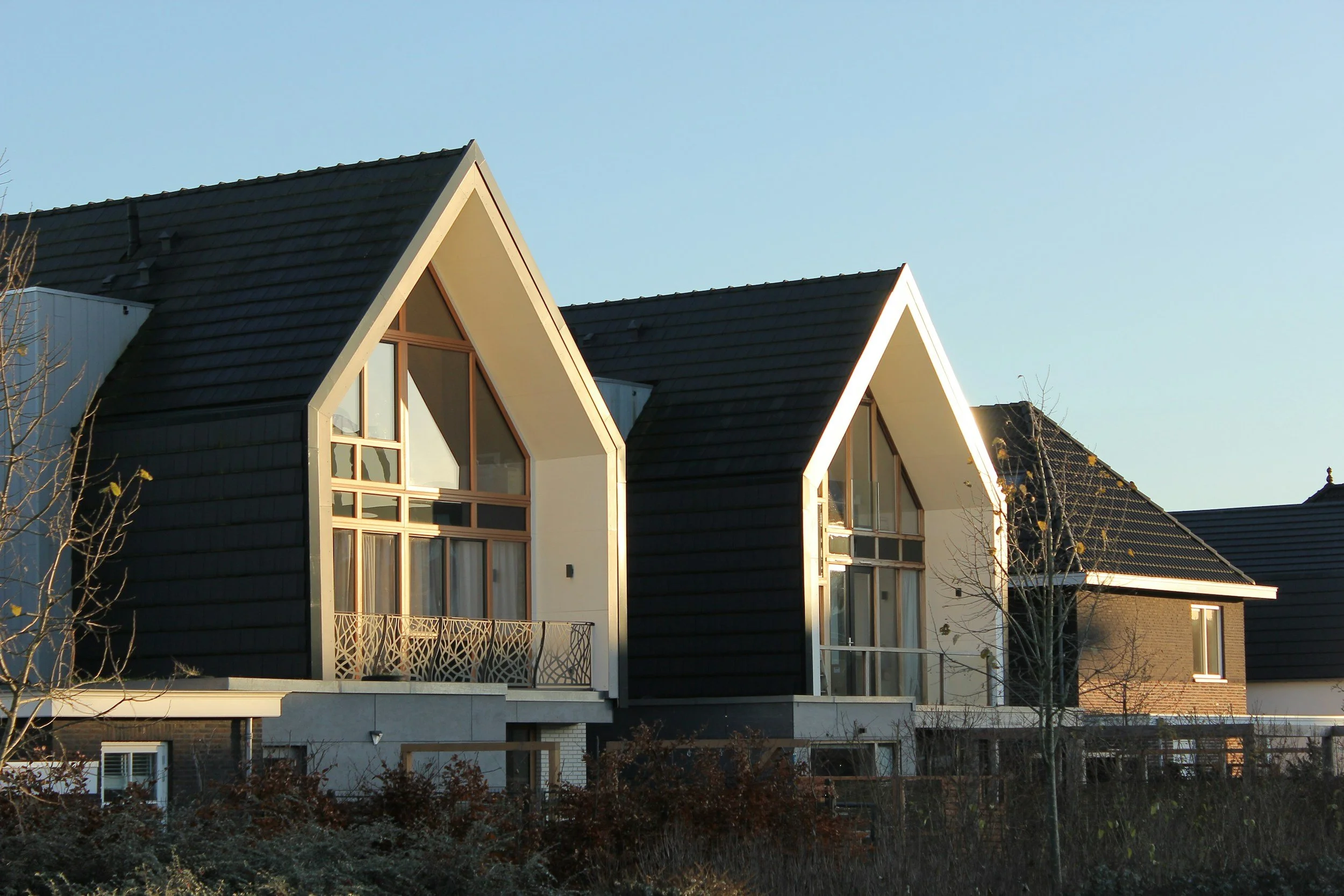
This is why Louise started her life project - DelHus which begins with a simple idea: what if single-family houses could be split, shared or transformed into homes for more than one household?
In English, we might call it a “shared house” concept, but that translation only partly captures the idea. DelHus is not just about roommates or informal flat sharing. It is about making the transformation of existing houses easier, safer, legal and scalable.
Louise’s own story gives the idea a concrete human dimension. After a divorce, she needed a home in Copenhagen. Like many people who are not wealthy, she found that the market did not offer many good options: especially not small, legal, affordable homes with access to a garden or a local community.
She eventually began exploring the possibility of sharing and splitting a house. But the process revealed just how difficult this is in practice. Architecture was only one part of the challenge. The real obstacles appeared in law, ownership models, insurance, lending, fire rules, sound regulations, address registration and municipal procedures.
This is where the project becomes systemic. DelHus is not only about one house. It asks how municipalities, policymakers and professionals can make it easier for people to use existing houses differently.
A large single-family home could become two smaller homes. An older person could stay in part of their house and rent another part to someone else. Two families could share one property. A divorced parent could live in a smaller unit with access to outdoor space. A rural house could become more flexible for ageing residents and new renters.
The housing crisis, in this view, is partly a crisis of formats. We have too many rigid housing categories for a society that has become much more diverse.
Density does not always mean towers
When urbanists talk about density, the conversation often jumps to high-rise buildings, infill blocks or new urban districts. Louise pushes the discussion in another direction. But density can also happen on a low scale.
It can happen inside existing buildings - by splitting a house or in unused rooftops. It can happen through extensions, conversions and smarter occupation of space and without demolishing a neighbourhood or replacing everything with new construction.
This is important because many current densification strategies are politically and socially contested. Large-scale redevelopment can raise land values and accelerate displacement. New housing is often expensive. Brownfield urban development can be better than greenfield sprawl, but it is still material-intensive and often shaped by the economics of investors, pension funds and municipalities.
Louise’s “climate and housing crisis matrix” is useful here. It compares different ways of creating homes not only by how many units they produce, but also by their climate impact. At the bottom are strategies such as demolishing existing houses and replacing them with new single-family or row houses. At the top are strategies that work with existing buildings and create more dwellings with lower environmental cost.
If cities only reward the easiest form of development, the market will keep producing what is profitable, not necessarily what is best for climate, affordability or social resilience.
The low-hanging fruit is not always easy
One of the most practical parts of the conversation concerns barriers. Many people already share houses informally. Some do it because they need help maintaining a property. Some because they want company. Some because they cannot afford to live alone. Some because they have too much space. But the legal and administrative system often makes these arrangements complicated or semi-legal.
Louise points out that rules are often created for good reasons: fire safety, sound protection, decent housing standards, plot division, insurance clarity. The problem is that these rules can also make it extremely difficult to do anything other than maintain the single-family house as a single-family house.
A vertical split may trigger one set of requirements. A horizontal split another. Shared insurance may create problems. Public support systems may treat unrelated people at the same address as one household. Banks may not know how to finance the arrangement. Municipalities may support the idea in theory but lack simple procedures in practice.
So the “low-hanging fruit” is not just architectural, but bureaucratic. It means:
simplifying pathwaysreating guidance
adjusting regulations
making it easier for homeowners to understand what is possible
helping municipalities identify which houses and neighbourhoods are suitable
creating financial and legal products that support sharing and splitting rather than blocking it.
This is exactly where DelHus positions itself: between architecture, policy, everyday life and systemic change.
Housing as climate policy, social policy and urban policy
The episode also raises a deeper political question: who is responsible for change? Louise’s answer is direct: everyone.
Politicians need to create the frameworks.
Municipalities need to propose better solutions.
The building industry needs to stop being quiet and show how it can create housing that is not only expensive and resource-intensive.
Citizens need to vote for change and demand different priorities.
This is not a comfortable answer, because it avoids the simplicity of blaming one actor. But it is probably the honest one. Housing systems are resilient. They resist change because every part of the system reinforces another part: finance, ownership, planning, regulation, cultural expectations and market incentives.
That is why the conversation feels so relevant beyond Denmark. Copenhagen may be the immediate context, but the problem is European. Cities want affordability, climate responsibility and social diversity, but still often rely on development models that increase land values, material consumption and exclusion.
The link with Urbcast’s previous conversations about gentrification and housing financialisation is clear. In “Is gentrification inevitable — or is it political?”, the discussion focused on how housing became an asset class and how planning operates within political constraints. Louise’s perspective adds another layer: even before we ask who owns the city, we should ask how intelligently we use its existing space.
A new imagination for old buildings
Perhaps the most inspiring part of this episode is that it does not frame old buildings as a burden. They are not simply inefficient leftovers from the past. They can become a resource for new forms of living. But this requires a cultural shift.
Architecture cannot only be about spectacular new buildings. It also has to be about repair, adaptation, maintenance, craftsmanship and practical transformation. Louise’s book recommendation — a Danish book on preservation and craftsmanship in the building industry — points in this direction. The future of architecture may involve fewer glossy renderings and more dirty hands.
This is also a generational issue. Many younger architects and planners no longer want to work only with abstract visions and spreadsheets. They want to understand materials, existing structures and the realities of everyday life.
The housing crisis will not be solved by one concept. DelHus is not a universal answer. But it opens a powerful question: what if the next urban revolution is not about building the new city, but about learning how to share, transform and care for the one we already have?
That may sound modest. But in a climate emergency, modesty might be one of the most radical tools urbanism has left.
Reading recommendation:
Bevaringsværdig Byggebranche by Den Grønne Ungdomsbevægelse (The Green Youth Movement) & Lærlinge for bæredygtighed
