
This shouldn’t be possible. Since COVID-19, long-term interest rates in Denmark have gone from around 1% to 4%. By the textbook, prices should have fallen. Instead, apartment prices on Copenhagen’s private market rose by roughly 60%. A city that regularly ranks among the most livable in the world has become one of the hardest to get into for many of the people who want to live there.
The gap between those who already own and those trying to get in seems to widen every year, especially for young people and newcomers. So who can still afford Copenhagen? And does the old promise still hold, that a good education and a good job will get you a home of your own?
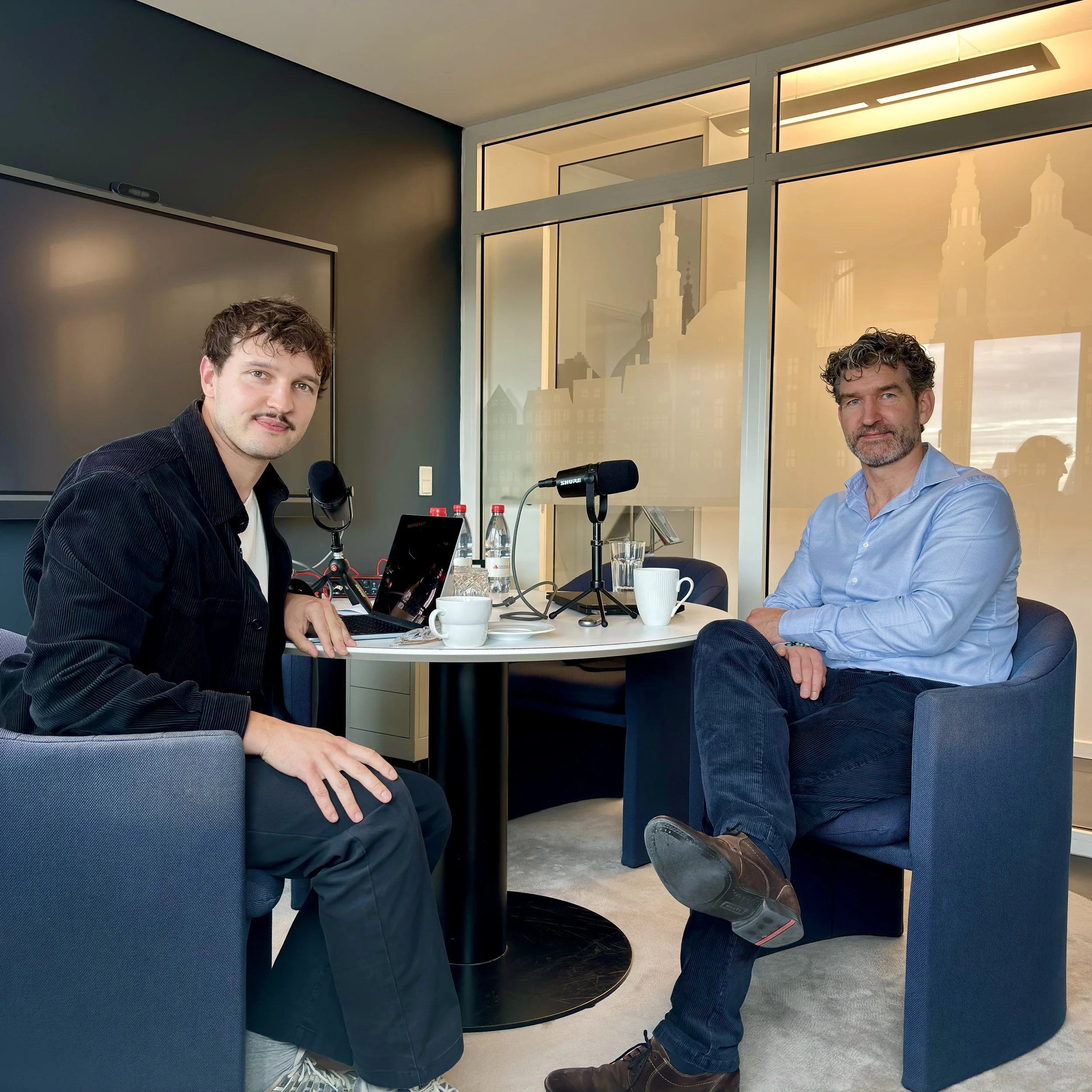
I put these questions to Nicholas Thurø, Managing Partner in Capital Markets at Cushman & Wakefield | RED. His team sells investment properties in Copenhagen, and residential now makes up 61% of all investment volume there. That means his clients want to understand, down to the square metre, how the private housing market behaves.
When the textbook stops working
Nicholas’s explanation is simple: you go back to the textbook, just a different chapter. “It’s simply a question of supply and demand.” When supply can’t keep up, prices climb, and fast-rising prices create their own momentum. If a flat got 20% more expensive this year, buyers rush in before it gets another 20% more expensive next year.
The numbers are dramatic. In 2023 the average price in Copenhagen was 50,000 kroner per square metre. Today it is 75,000, a 50% rise in three and a half years. Nicholas is clear that this cannot go on forever. “If prices are increasing 20% per year and people’s income is increasing 2% per year, then every year fewer and fewer people will be able to buy.”
2026 may be the year the curve finally bends. Prices have slipped by 1% since Q1. The average discount on asking prices has doubled, from 2% to 4%. The number of flats for sale has roughly doubled since January. And far fewer people are arriving: between 2009 and 2019, Copenhagen gained about 10,500 new residents a quarter on average, but in Q2 2026 it gained just 2,800. Once buyers see that prices have stopped rising, they stop rushing. That is good news for first-time buyers, but prices have stopped at their peak.
The end of the “good job” model
The most striking part of our conversation was about who actually manages to buy. In the mid-1990s, when Nicholas started out at a real estate agency, buyers typically put down 5–6% in cash and borrowed the rest. In the past year and a half, fewer than 1% of buyers have financed more than 90% of the price.
The average apartment in Copenhagen municipality now costs 6.3 million kroner, over €800,000. A first-time buyer, on average 30 years old, needs to bring roughly €220,000 in cash. Nicholas’s estimate is blunt: around 95% of first-time buyers probably need help from their parents, or a very high income.
“You cannot, as it was 20 years ago, take a good education, get a good job and then buy a home in Copenhagen. That’s not an option right now.” I asked whether that model was over. For now, yes, he said, and it will take many years to come back, if it does at all. Owning a home in Denmark isn’t impossible, but owning one in the city increasingly is. Buyers move 20, 30 or 50 kilometres out.
Renting: three doors, most of them locked
Only about 20% of Copenhagen’s homes are owner-occupied, so most people rent. But renting has its own hierarchy. Flats built after 1992 have free market rent, and those rents have risen almost 30% in three years. Older flats have regulated rent, often far below market, but they rarely reach the open market. Owners renovate and raise the rent, or offer the flat to a child, a relative or a friend. “If you’re not connected, you won’t be able to get to those apartments.”
There is also social housing (almene boliger), where rents are capped. Construction budgets are capped too, so for years almost nothing got built. And there is the cooperative andelsbolig, which Nicholas calls probably the best way into the market. Prices are capped, but the waiting lists are long, and you might be number 100.
Arriving with a suitcase
Which brings us to the newcomer. “If you’re a foreigner coming into Copenhagen, you don’t have a lot of options. You have one option, and that’s to find a rental flat on market rent.” In the city that means around €300 per square metre a year. Fifteen to twenty kilometres out, it is closer to €240. Many people end up sharing, splitting a three-room flat between strangers. In Nicholas’s words, there’s no free lunch.
His advice to those who plan to stay is pragmatic. Start by renting, learn the city, work out which suburbs actually suit you, and take it from there.
Cheaper money, higher prices and a one-krone plot
On policy, Nicholas is sceptical. Regulation, he argues, always comes too late, landing at the late stage of a cycle. Making it easier to borrow would only push prices higher. Polish listeners will know this story: I mentioned how a scheme in Poland that made borrowing easier for young people did exactly that, and he agreed.
Copenhagen already requires that 25% of new housing be social housing. In practice, mostly the private 75% got built, because the social part was too expensive to deliver. Land for social housing sells for roughly 4,000 kroner per square metre of buildable space, against around 15,000 for private housing.
His own idea is deliberately provocative. The state and the municipality are Copenhagen’s biggest landowners. So the city could design a project of 100 apartments, sell the plot for one krone, and give it to whichever private investor commits to the lowest rent for the next 25 years. After that, the owner is free to sell or rent at market rates. “If I was a mayor, I’ll go for mayor the next time.”
There is a backstory here. Twenty-five years ago, Copenhagen owned a lot of housing and sold it off, cheaply in hindsight. The city had no money, nothing was being built, and nobody wanted to live in the centre. Vienna, where the city owns a large share of housing, seems to fare better. Copenhagen became a success story, and the success became the problem.
Copenhagen hasn’t stopped being livable. It has stopped being reachable, and a good job is no longer the ticket in.
Reading recommendation
📘 Urban Economics and Real Estate Markets — Denise DiPasquale & William C. Wheaton
In the mid-90s Nicholas sneaked into William Wheaton’s lectures at MIT and bought this book. He says it is what made him start doing his own market analysis.
