
Is gentrification inevitable — or is it political?
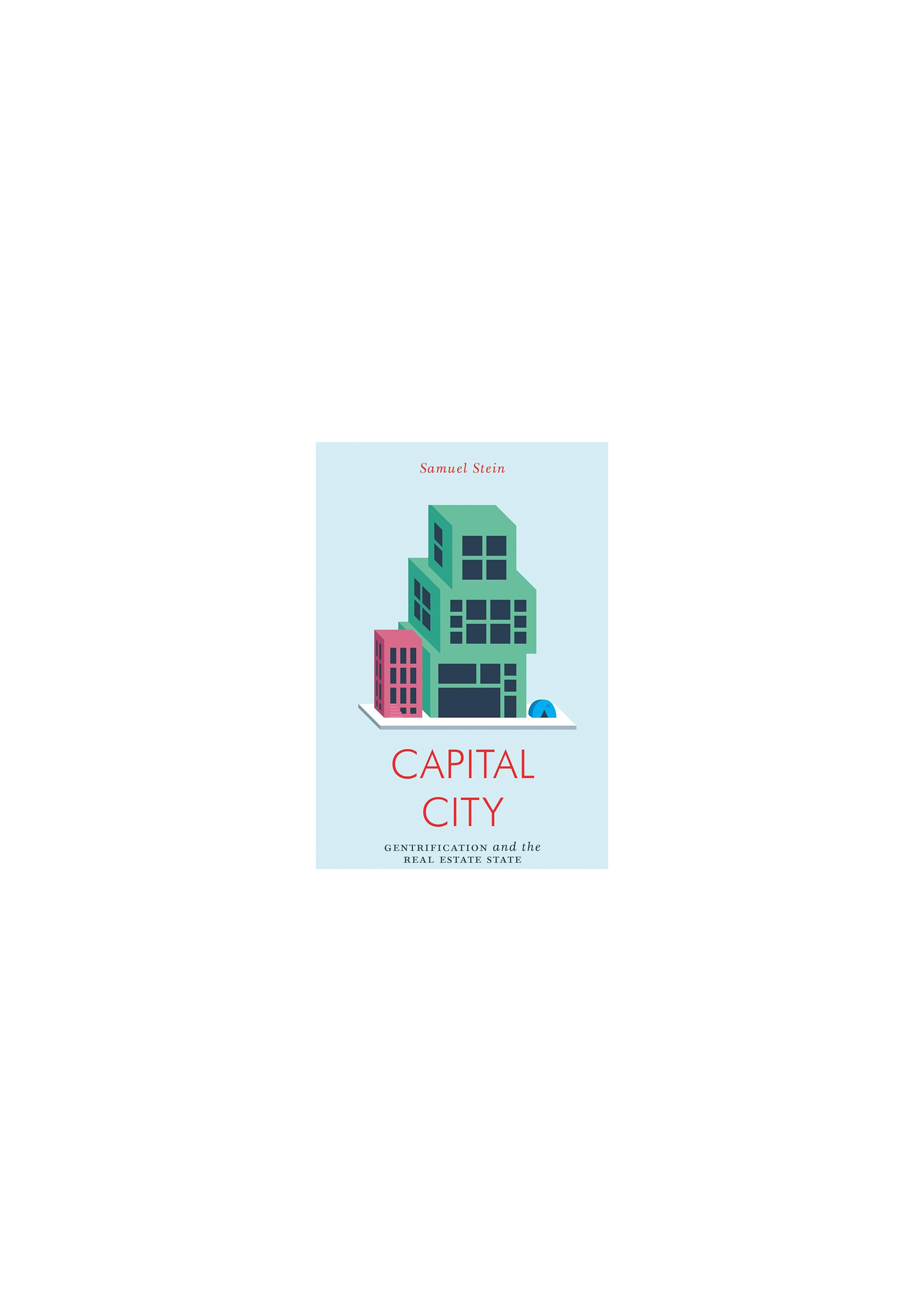
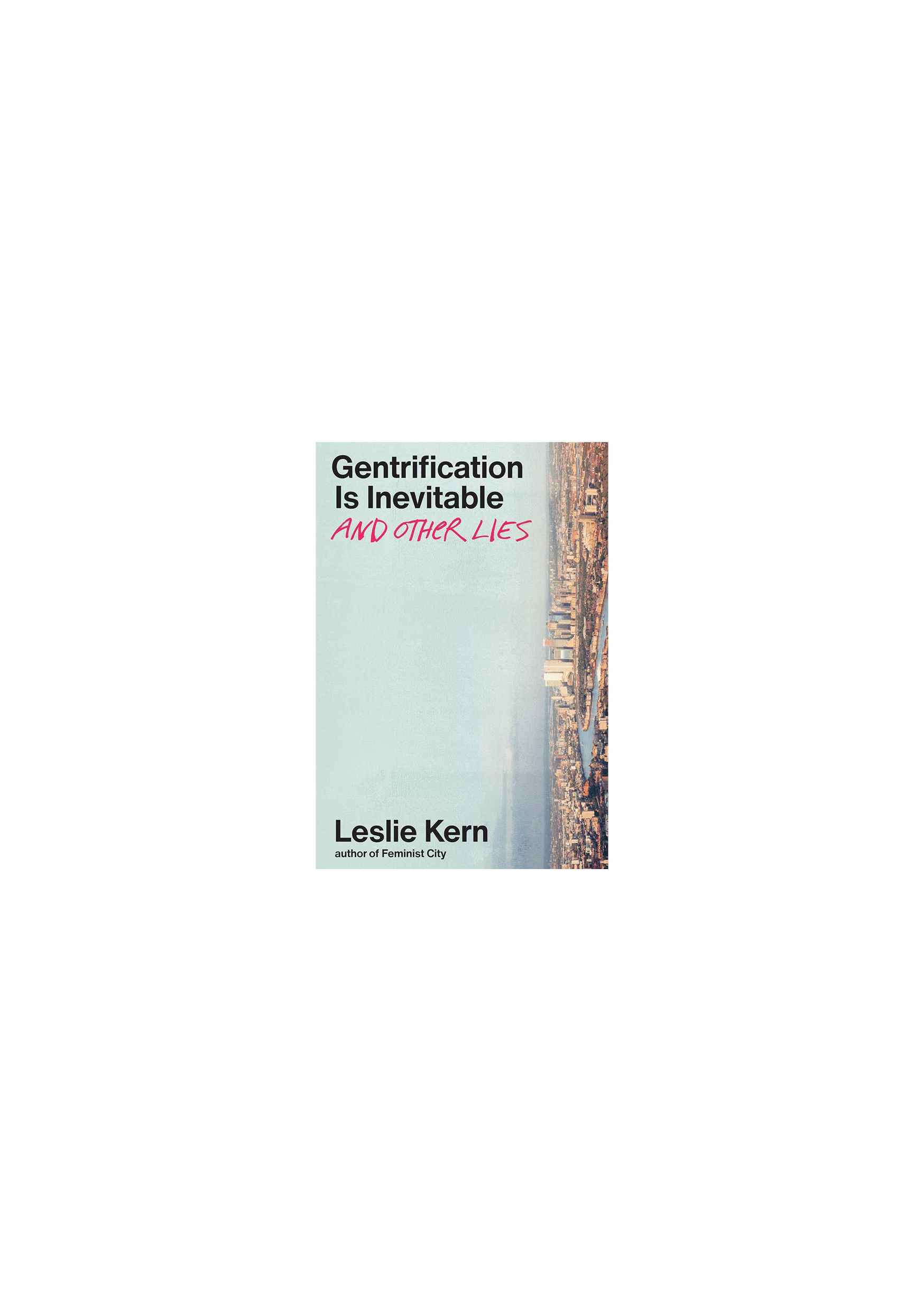
Luxury towers rise, cranes fill the skyline, and rents climb year after year. For many city residents, these changes feel almost inevitable — a natural consequence of urban growth and prosperity. But according to urban thinkers Leslie Kern (The Feminist City, Gentrification Is Inevitable and Other Lies) and Samuel Stein (Capital City: Gentrification and the Real Estate State), that story hides a much more uncomfortable truth.
Gentrification is not simply the result of market forces. It is the outcome of political choices about housing, planning, and land.
“Gentrification isn’t a natural process — it’s a political one.”
Understanding this shift in perspective is key to understanding today’s housing crisis.

When housing becomes an asset
One of the biggest changes shaping cities today is the transformation of housing into an investment vehicle. For much of the twentieth century, homes were primarily understood as places to live. Today, they are increasingly treated as financial assets traded on global markets.
Large investors — including pension funds, real estate trusts, and multinational companies — now buy housing at massive scale. In many cases, tenants don’t even know who owns their building. As Leslie Kern explains, this financialization reshapes entire cities.
The effects are visible in cities like Toronto, where the condominium boom dramatically changed both the skyline and the social geography of the city. Downtown districts became wealthier and whiter, while lower-income residents and newcomers were pushed toward outer neighborhoods.
The result is what urbanist call a “dual city”:
A prosperous urban core attracting investment and high-income residents
Peripheral neighborhoods where lower-income communities and immigrants concentrate
The contradiction of urban development
Urban development often promises prosperity for everyone. Luxury buildings bring investment, jobs, and economic growth. Yet this growth contains a deep contradiction. Samuel Stein, who worked with labor unions representing building workers and construction workers in New York, witnessed it firsthand: the very people building and maintaining luxury developments often cannot afford to live in them.
“Planning is powerful — but planners themselves are not.”
Urban planners shape cities, but they operate within political and economic systems dominated by real estate capital. Developers influence infrastructure decisions, zoning rules, and tax incentives. In many cities, large developments receive substantial tax exemptions intended to stimulate construction.
But these incentives often create a paradox. Luxury developments that are supposed to expand the city’s tax base sometimes pay little or no property tax for decades. Instead of funding public services, the system can end up subsidizing high-end housing.
The densification dilemma
Cities across the world are trying to densify to address climate change and urban sprawl. Building more housing in central areas is widely seen as environmentally and economically necessary. But densification alone does not solve the housing crisis. Without protections, new development can accelerate displacement.
The pattern often looks like this:
New luxury housing is built in central neighborhoods
The area becomes more desirable
Property values increase
Landlords raise rents on existing buildings
Long-term residents are forced to move
Sam argues that the most effective countermeasure is one that has existed for decades. Rent stabilization and rent control. By limiting rent increases to the real costs of maintaining a building — rather than speculative market value — cities can protect tenants from displacement even as neighborhoods change.
Community ownership as an alternative
Beyond regulation, cities are experimenting with alternative ownership models designed to keep housing permanently affordable. One of the most promising is the community land trust.
In this model:
A nonprofit entity owns the land
Another nonprofit or cooperative owns the building
Residents control day-to-day management but cannot speculate on property value
The structure prevents both landowners and residents from capturing windfall profits from rising land prices. Instead, the housing remains permanently affordable. Community land trusts have existed for decades, but they face a major challenge in today’s real estate markets: land prices in central cities are extremely high.
For these models to expand, public policy may need to intervene — giving nonprofits the first opportunity to purchase land or providing public subsidies for affordable housing acquisition.
The feminist perspective on urban space
Leslie Kern’s work adds another layer to the housing debate: how cities prioritize different forms of everyday life. Urban planning often assumes a particular type of user — the commuter traveling between suburban home and downtown workplace. But cities are also spaces of caregiving, parenting, and everyday survival. When Leslie became pregnant, she experienced the city in a completely different way.Simple tasks suddenly became difficult:
Finding public bathrooms
Navigating crowded streets with a stroller
Accessing safe places to rest
Moving through transit systems not designed for caregivers
The experience helped shape the idea behind the feminist city — an approach to urban planning that centers care, accessibility, and everyday needs. Even seemingly mundane policies can reveal hidden priorities. For example, many cities clear highways before sidewalks during snowstorms, prioritizing suburban commuters over pedestrians, caregivers, and elderly residents.
A growing tenant movement
Despite the scale of the housing crisis, Lesloe and Sam both see signs of change. In cities like New York, tenant movements have grown stronger in recent years, successfully pushing for expanded rent stabilization policies and stronger tenant protections. Housing politics is becoming more visible — and more contested.
“The question of housing isn’t technical. It’s political.”
Cities are beginning to recognize that affordability cannot be left entirely to the market.
Instead, solutions may require:
stronger tenant protections
public investment in non-profit housing
cooperative ownership models
community land trusts
policies that treat housing as infrastructure rather than speculation
The future of the urban housing crisis
The housing crisis now affects cities across North America, Europe, and much of the world. Rising rents, investor-driven development, and financialized housing markets are reshaping urban life. But the outcome is not predetermined. If housing continues to function primarily as an investment asset, cities will increasingly be shaped by the logic of capital.
If housing is treated as a social good or social infrastructure, a different future becomes possible. Recognizing that gentrification is political does not make the problem easier. But it makes one thing clear: the future of cities will not be determined by markets alone. It will be shaped by the political choices societies make about land, housing, and the right to the city.
Reading recommendation:
The Feminist City by Leslie Kern
Gentrification and other lies by Leslie Kern
The Capital City by Samuel Stein
